Project overview
A commercial bakery and food-manufacturing enterprise selected a Newdesy K-TEK-A120KP-AC-BL-DWP stainless steel keypad for integration into production control terminals. The application required a compact operator interface that could support repetitive numeric entry while facing the flour dust, humidity and frequent cleaning associated with a busy food-production environment.
To protect customer confidentiality, the company name and production-line details are not disclosed. This case focuses on the keypad configuration and the integration considerations relevant to bakery automation, ingredient batching and other food-processing equipment.
Compact controls for production operators
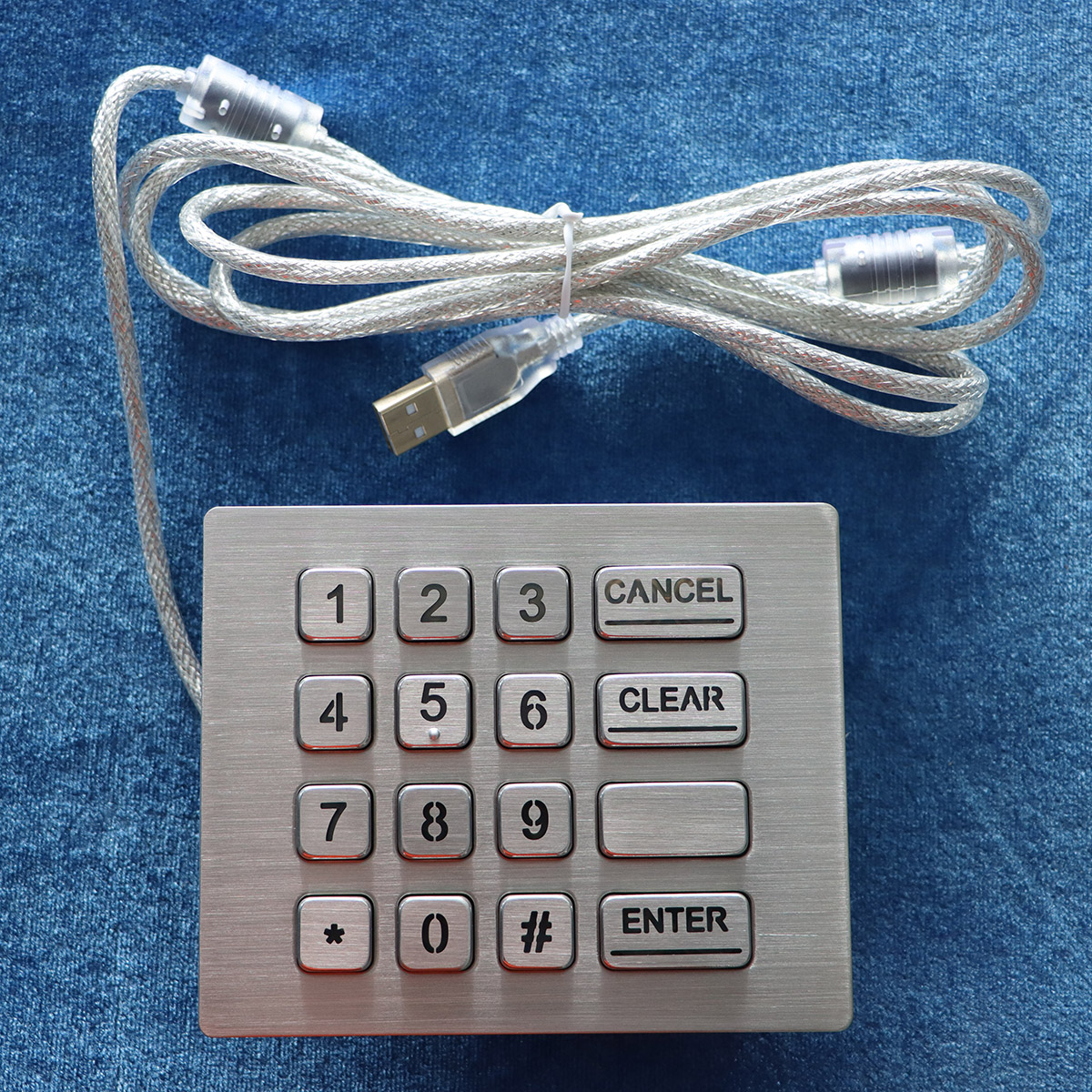
The 16-key layout concentrates the functions needed for routine machine input into a small panel footprint:
- Numeric keys 0-9 for quantities, recipes and production settings
- Dedicated CANCEL, CLEAR and ENTER keys for faster workflow control
- Asterisk and number-sign keys for configurable system functions
- Tactile reference marker on the 5 key to support orientation by touch
- Stainless steel keycaps and front plate for intensive industrial use
- USB connection for straightforward host-system integration
The simplified layout helps reduce unnecessary keys at the workstation and can make common operator actions easier to identify when gloves, noise or production pressure make a standard office keyboard impractical.
Protection in food-processing environments
The rated exposed face provides IP65 static protection against dust and water jets when the keypad is correctly mounted and sealed in the host panel. This helps protect the input surface from flour dust, airborne particles and incidental moisture found around bakery and food-processing equipment.
Project note: IP65 applies to the specified exposed face and does not make the complete machine suitable for submersion or unrestricted high-pressure washdown. Final protection depends on the panel cutout, gasket compression, enclosure design, cable routing and installation quality.
Hygienic stainless steel surface
The stainless steel front surface is durable, non-porous and easier to wipe than a conventional office keypad with deep plastic key gaps. It supports routine cleaning around food-production controls while resisting wear from repeated operator use.
Cleaning procedures should still follow the equipment maker's hygiene plan. Compatibility with a specific sanitizer, alkaline cleaner, acid, oil or process chemical must be confirmed before use because concentration, temperature and contact time can affect materials and printed legends.
Rear mounting and cable integration
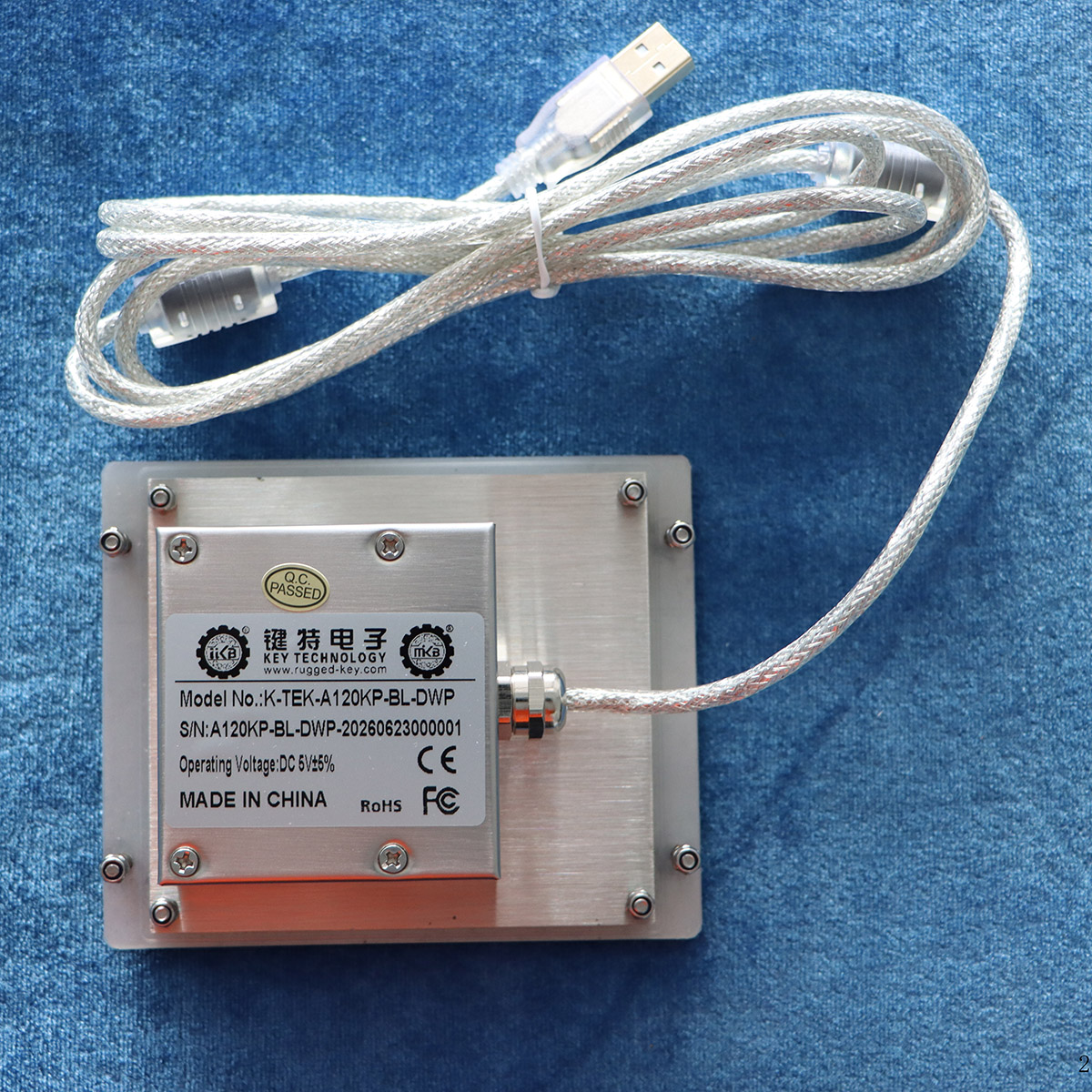
The rear photograph shows threaded mounting studs around the keypad perimeter, a protected metal electronics enclosure, cable gland and USB cable with ferrite components. This configuration allows the keypad to be secured behind the customer's control panel while keeping the operator-facing surface compact and orderly.
Before production, the equipment designer should confirm the panel cutout, available mounting depth, gasket compression, cable bend radius, grounding method and access for future service.
Suitable application directions
- Commercial bakery production controls
- Ingredient weighing and batching stations
- Food and beverage processing equipment
- Packaging and filling machinery
- Washable industrial kiosks and operator panels
Planning a similar keypad project
- Required key count, legends, language and function mapping
- Panel cutout, mounting depth and enclosure material
- Expected flour, dust, moisture and cleaning exposure
- Required interface, cable length, connector and ferrite arrangement
- Backlighting and visibility requirements
- Required compliance documents and destination market
- Prototype quantity, validation plan and production schedule
Newdesy supports 1-PC prototypes, small-batch production and OEM/ODM customization. Share your panel drawing, operating environment and cleaning requirements so our engineering team can review an appropriate industrial keypad configuration.